
Aleppo soap:
Behind the scenes of its production
Aleppo soap may seem like a simple product because its list of ingredients is very short: olive oil, laurel berry oil, natural soda, and water. But combining these different components requires several steps. Welcome behind the scenes of the production of authentic, one-of-a-kind Aleppo soap!
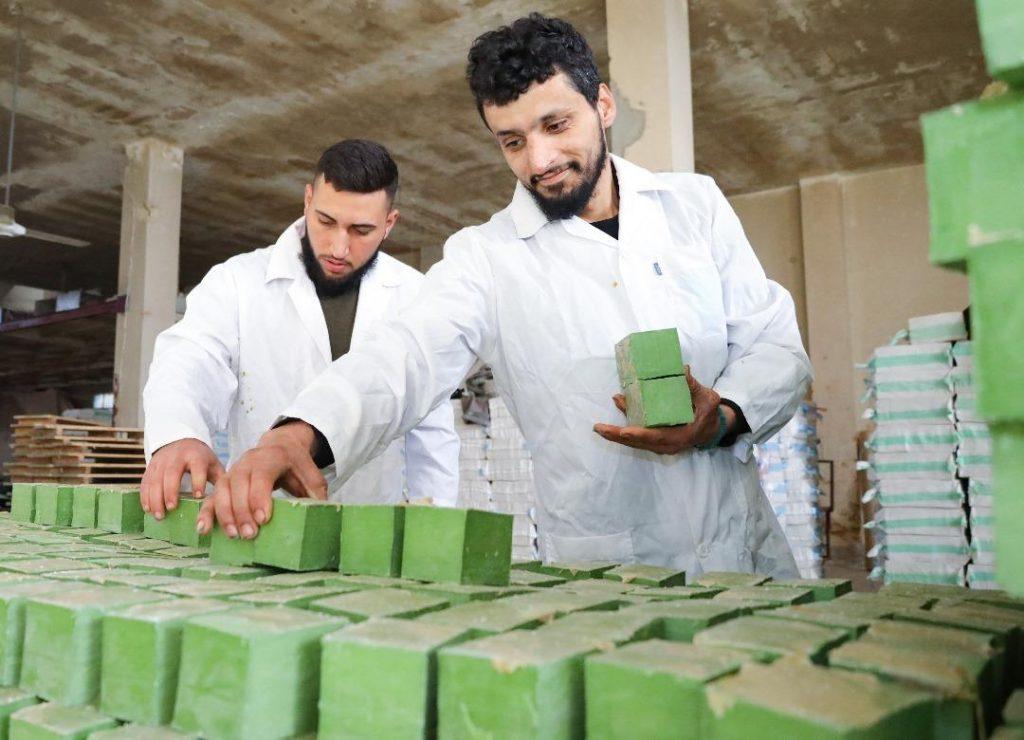
Step 1: Saponification involves heating water and lye in a cauldron with steam until they reach a certain temperature. Olive oil is then added to the mixture. It is important to note that the temperature must not be too high, otherwise the beneficial properties of the olive oil will be lost. Like baking, Aleppo soap requires patience. The mixture is left to rest for about 12 hours.
Step 2: After this resting phase, laurel berry oil is added to the mixture. The mixture is then heated again and stirred to ensure it is well blended.
Step 3: The soap paste is rinsed several times with clean water to remove all traces of lye. The water is then drained from the cauldron. All these steps are part of the saponification process. This is a crucial phase in the production of Aleppo soap. Thanks to this process, the olive oil and laurel berry oil—which are both fats—are able to mix with the water, which is a liquid. A chemical reaction then takes place between these components of different natures. Remember your middle school chemistry classes!
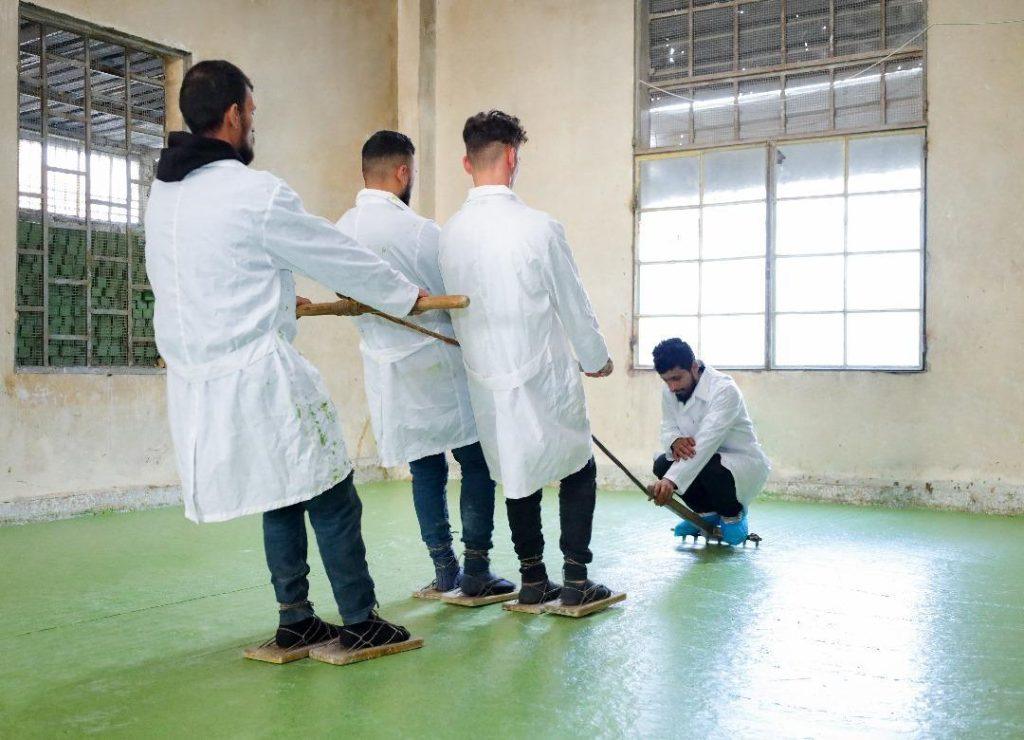
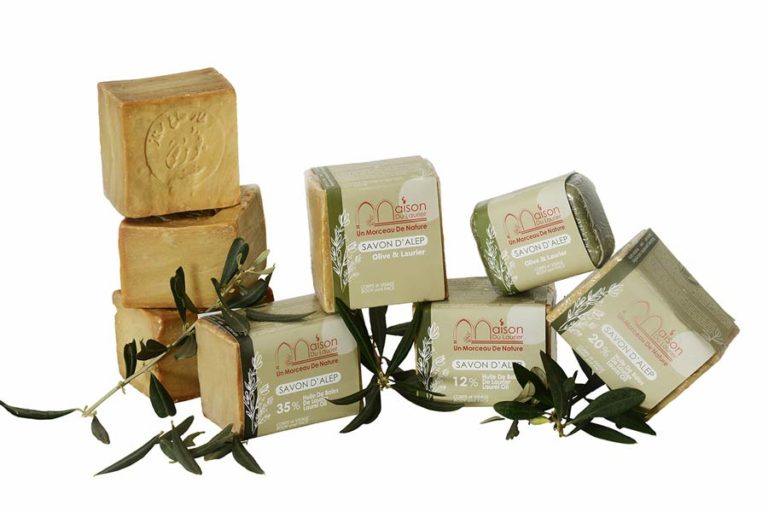
Step 4: Next, the soap paste is spread out and smoothed. Once spread out, the soap can cover an area of 400 square meters! Once the paste hardens, the master soap maker forms 200-gram blocks of soap and stamps them by hand. Each master soap maker has their own unique mark.
Step 5: The soaps are placed on pallets and sorted according to their percentage of bay leaf oil.
Step 6: Next comes the curing phase. The soaps are stored in a cellar for at least 9 months. And yes, it takes a lot of patience to produce a quality product! This is when the soap takes on its distinctive color: yellowish-brown on the outside, while the center remains olive green. This phenomenon is due to the oxidation of the soap.
Step 7: The soaps are now ready for sale. They are cleaned, wrapped in plastic, and placed in cardboard boxes.
Step 8 (the best part): You can now enjoy all the benefits of Aleppo soap, whether to treat acne, moisturize your skin, or even for household chores.
In conclusion, we see that Aleppo soap follows an artisanal and authentic manufacturing process that has remained unchanged for millennia. But like all good things, it requires patience and the expertise of the master soap maker. You’ll never look at Aleppo soap the same way again!
Les derniers articles
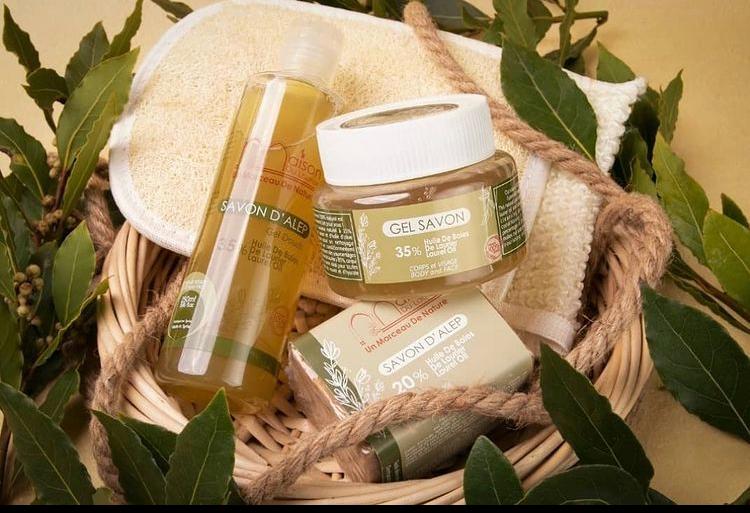
Aleppo soap or Marseille soap?
Aleppo soap or Marseille soap? You’ve probably wondered what the difference is between Aleppo soap and Marseille soap. When should you use one over the[...]
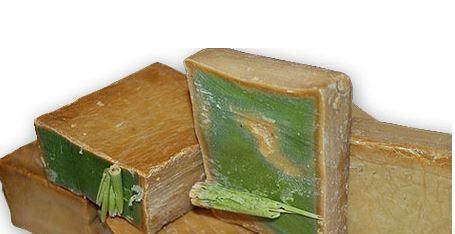
Aleppo Soap: How Can You Tell the Real Thing from the Fake?
Aleppo soap: How can you tell the real thing from the fake? For several years now, Aleppo soap has been praised for its many benefits.[...]
Aleppo soap for household cleaning
Aleppo soap for household cleaning For several years now, laundry detergents have been criticized for their impact on health and the environment. In Europe, more[...]